BLO’s ‘A Streetcar Named Desire’ is a modernist masterpiece
The BLO brings new life to André Previn’s music in the Tennessee Williams play





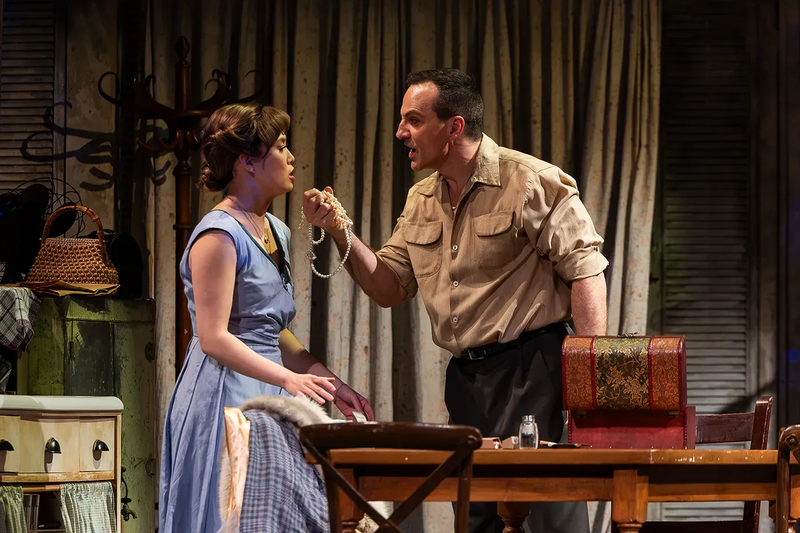
Photo courtesy of Nile Scott Studios
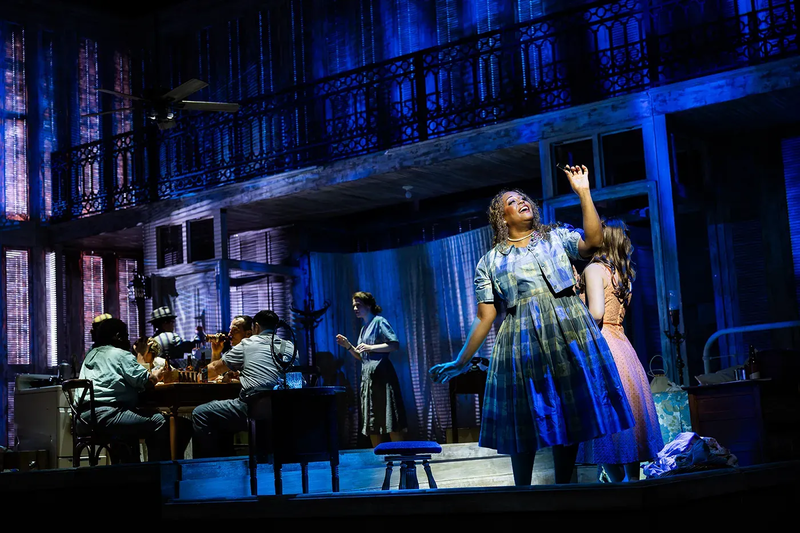
Photo courtesy of Nile Scott Studios
A Streetcar Named Desire
Based on the play by Tennessee Williams
Music by André Previn
Directed by Daniela Candillari
Emerson Cutler Majestic Theatre
Nov. 5–8, 2026
From Nov. 5 to 8, the Boston Lyric Opera (BLO) performed André Previn’s setting of the Tennessee Williams play, A Streetcar Named Desire.
The play first premiered at Boston’s Wilbur Theater in 1947 before moving to Broadway later that year. There, it solidified Williams’s reputation as one of the great American playwrights of the 20th century. A Streetcar Named Desire was later made into a critically acclaimed Warner Bros. film directed by Elia Kaza; then, it was adapted for the opera stage by Previn as composer and Philip Littell as librettist. The adaptation premiered in 1995 at the San Francisco Opera with Previn himself conducting it, and has since enjoyed a respectable legacy of performances across the United States and abroad. It now returns to Boston as part of the BLO’s 50th anniversary season.
The opera itself largely revolves around three individuals: Blanche DuBois (Brittany Renee), her sister, Stella Kowalski (Angela Yam), and Stella’s husband, Stanley Kowalski (Thomas Glass, with David Adam Moore substituting for the final show). After the entr’acte, the rest of the opera unfolds in the Kowalskis’ house in New Orleans. There, it traces the story of Blanche, who arrives after losing her ancestral home in Mississippi. She spends many months trying to build a new life before her sister and brother-in-law eventually force her to leave and be institutionalized.
Though the play does have some light moments, it largely deals with very serious themes; class, race, and gender are omnipresent throughout the work, in addition to further philosophical themes such as the dialectic between vastness and crampedness and light and dark. Viewers should be aware that the work has depictions of domestic abuse and sexual assault. The text, music, and acting all treat these moments throughout with the severity that they deserve.
In line with the serious subject matter, Previn sets the play to suitably modern music. The program note suggests that the music is reminiscent of Alban Berg, the great lyric dodecaphonist, though traces of Erich Wolfgang Korngold, Richard Strauss, or Bernard Hermann can also be detected. The music is languid and languorous, luxuriating in its post-romantic harmonies. The melodies always hint at tonality, yet never truly resolve to any key. Jazz undertones and memories of Haydnian scherzi flit in and out of the music, emerging for a phrase or two before being subsumed into the all-encompassing haze of the music.
Perhaps the only moments when the fog seems to clear are in Blanche’s arias; the third and final aria in particular is especially lucid as she meditates on life after departing from the Kowalskis’ and fantasizes about dying at sea. And yet, this too is ephemeral; the music quickly returns to the fog for the grand finale as Blanche’s fantasies are shattered over the course of the story. Listeners should expect to be suspended in the musical brume. The effect can feel awkwardly long at times, but the modernist opera-goer will recognize its obscured tonality and suspended feel as a common quality in operas of the period.
In regard to the singing, Renee positively enchanted audiences as Blanche, filling her sky-high part with immense richness of voice and texture. The work has few operatic runs and largely presents its difficulty in long-held notes, a challenge to which Renee rose to admirably. Her vibrato felt like a warm embrace, which is fitting given her character’s more generous personality.
In contrast, Stella and Stanley have fewer moments, with Stanley having no arias throughout the entire work. Even so, Yam and Moore each bring out their parts effectively. Throughout, their singing almost feels like speech that has been slowed as if in molasses and crystallized to draw out the music held within.
Moore especially should be given credit for making his character so very hateable, an important characteristic for any actor playing a villain or villain-adjacent role. The rest of the cast was also well-chosen and acted out their parts admirably. Brenton Ryan and Suowei Wu should also be given their proper dues for skillfully capturing their awkward, stilted interactions with Blanche in their respective duo scenes, which highlight not only the farce but also the intense tragedy of the work as a whole.
Meanwhile, Daniela Candillari deftly conducted the BLO Orchestra. The crux of this work largely lay in the brass and wind sections, as befits an opera set in New Orleans, and the orchestra delivered on that front. Almost-fanfares and sultry solos pervade the work, with the strings highlighting these solos in a way that imperceptibly heightens the magic of the music.
The set was designed by Andrew Boyce, whereas the lights and projection were designed respectively by Eric Southern and Kylee Loera. Together, their intricate work highlighted the themes of the opera remarkably well, with many of the most important moments being supported by intelligent lighting, staging, and projections. Amanda Gladu’s costume design was also excellent; Blanche’s dresses served as an incredible array of the fashions of the period, visually dividing her from the more plainly dressed Kowalskis up until their final separation.
This staging of A Streetcar Named Desire was a resounding success, with its music, cast, and design all working together to highlight the play’s harrowing themes. The score and text worked hand in hand to explore a form of modern realism that could emerge only in the postwar American context. Listeners should be ready to soak in its modernist hazes in this excellently executed offering for the BLO’s 50th anniversary.