Boylston Street’s new upscale dim sum restaurant has its sparkling moments
Zhu offers an elevated take on Chinese classics, but I found it better suited to a company dinner than a spontaneous night out





Grace Zhang–The Tech
Grace Zhang–The Tech
Grace Zhang–The Tech
Grace Zhang–The Tech
Grace Zhang–The Tech
Grace Zhang–The Tech
★★★★☆
Zhu
Chinese, $$$$
903 Boylston Street, Boston, MA 02115
Monday to Thursday 11 a.m.–9 p.m.
Friday to Sunday 11 a.m.–9:30 p.m.
Go down Boylston Street, and you’ll find the smallest Trader Joe’s in the world and Boston’s only lesbian bar. Sandwiched between them is Zhu, a new upscale Chinese restaurant that offers dim sum and other dishes from Jiangnan and Sichuan.
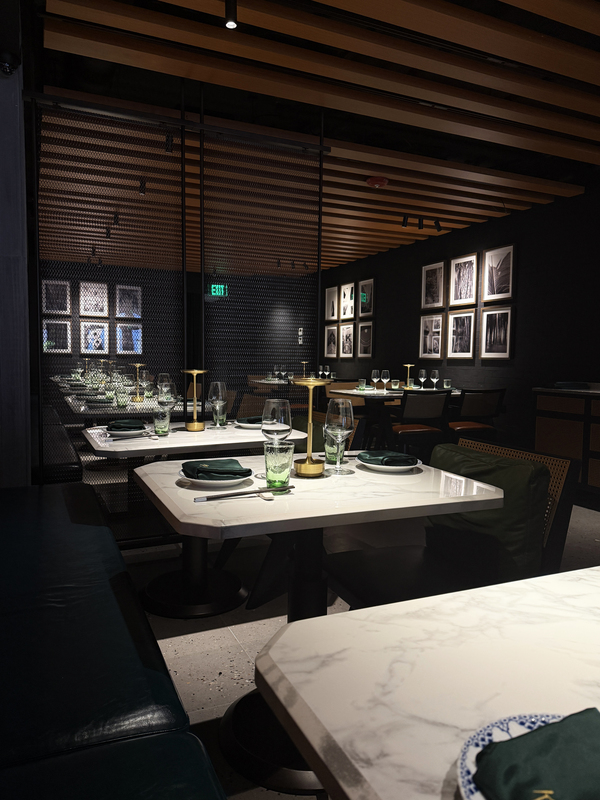
Beyond its unassuming iron doors, Zhu makes a grand first impression. Polished wood beams line the walls and ceiling, while a sweeping marble staircase evokes an eco-friendly luxury estate. Behind it is a dining space of marble tables and black walls, as well as an open kitchen that offers a glimpse of chefs preparing everything in-house.
Despite how my fellow wannabe student-critics and I were clearly dressed for the wrong tax bracket, staff in pristine suits and emerald-green ties — a nod to the bamboo motif behind the restaurant’s name — greeted us warmly. They led us upstairs, where, in the bright daylight, the opulent setting felt a little wasted on a Sunday brunch.
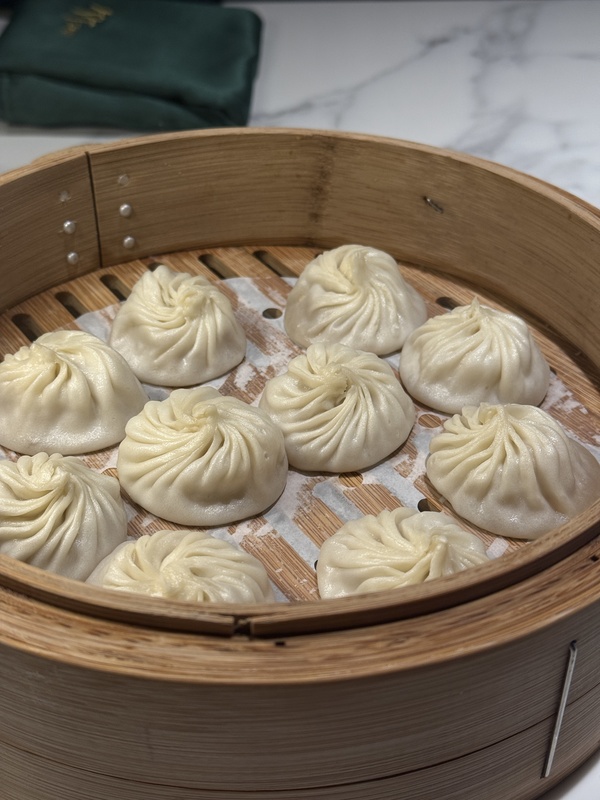
This sentiment continued with the food, particularly as the classic pork xiaolongbao felt over-crafted. Each delicately pleated soup dumpling, from its light broth to its hand-minced filling, showed obvious care. Yet, I found myself craving a simple Chinatown dumpling crawl instead. However, Eric Wang ’28, who joined me for the meal, found that the xiaolongbao transported him back to his village in China. Notably, Zhu itself was inspired by head chef Joanna Duan’s mother’s simple xiaolongbao shop in China.
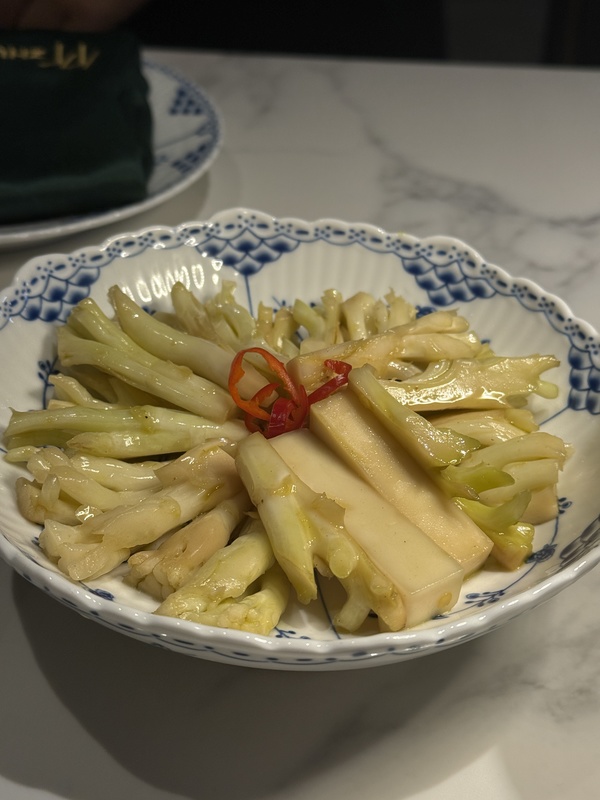
Similarly, the not-so-aptly named “Mom’s Home-Style Cauliflower” felt more like fine dining than a comfort meal. While the name might’ve conjured a heaping plate of fragrant cauliflower, the reality was a small dish of cauliflower stems (I could not tell you where the flowers went), with a lone slice of red pepper adding a pop of color in the center. As another friend put it, “If my mom made this cauliflower, I’d wonder how she had the time to do so.” Despite its minimalist appearance, the dish had a slowly building heat, which Wang noted was nicely offset by the cold temperature of the cauliflower.
Next came the hot and sour seafood soup, a thicker broth that amounted to barely four spoonfuls between the three of us. Its unique consistency was similar to that of a soft-boiled egg yolk, fully coating the conch and vegetables. I choked on the delayed spicy kick, which earned me a few judgmental stares around the table. (I have the spice tolerance of a Victorian child.) Despite the pain, I did appreciate those few seconds of satisfaction before the heat hijacked my senses, and my less heat-sensitive tablemates quite enjoyed the balance of the spicy and sour notes.
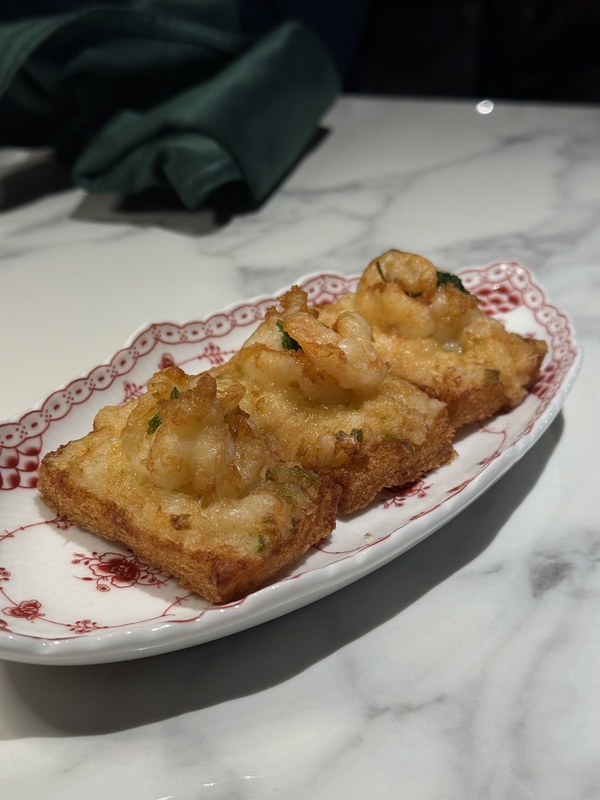
The best small dish of the bunch was unanimously the crispy shrimp toast, served with a wasabi mayo sauce. The combination of the savory, golden-brown toast and buttery, melt-in-your-mouth shrimp came together to resemble a better lobster roll at a (thankfully) lower price point. What especially elevated the toast was the wasabi mayo sauce, which was surprisingly mild. If I came back in the future, I’d order this dish again.
I’d also like to try the apple char siu puff, which was unavailable during this meal. Zhu, which held its soft opening on Sept. 28, is still working out some kinks, and the full menu is expected to be available after the restaurant’s grand opening in several weeks.
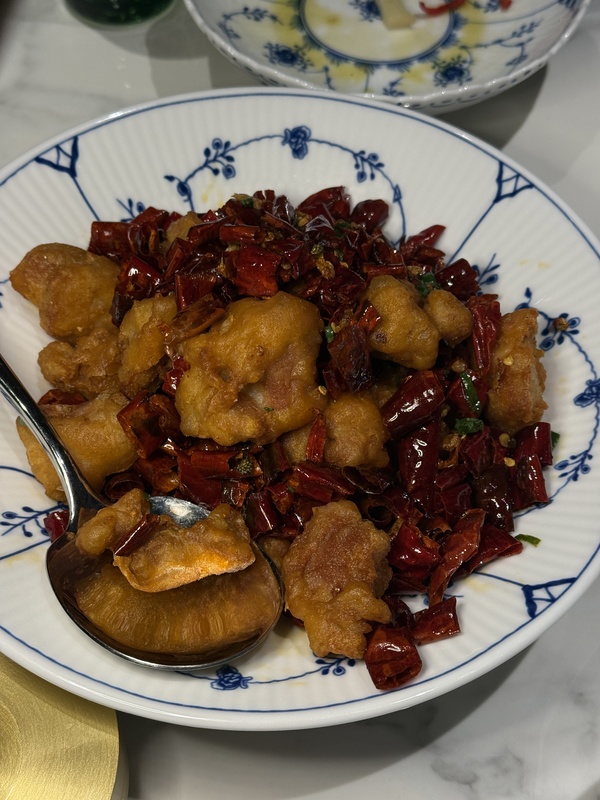
For our entrees, we had originally ordered the Sichuan spicy crispy chicken and the sweet-and-sour pork, but were prepared to enjoy only the former after the staff told us the pork was unavailable. We were pleasantly surprised by the lack of grease in the juicy yet flavorful chicken, and even more excited when the pork did arrive after all (on the house)!
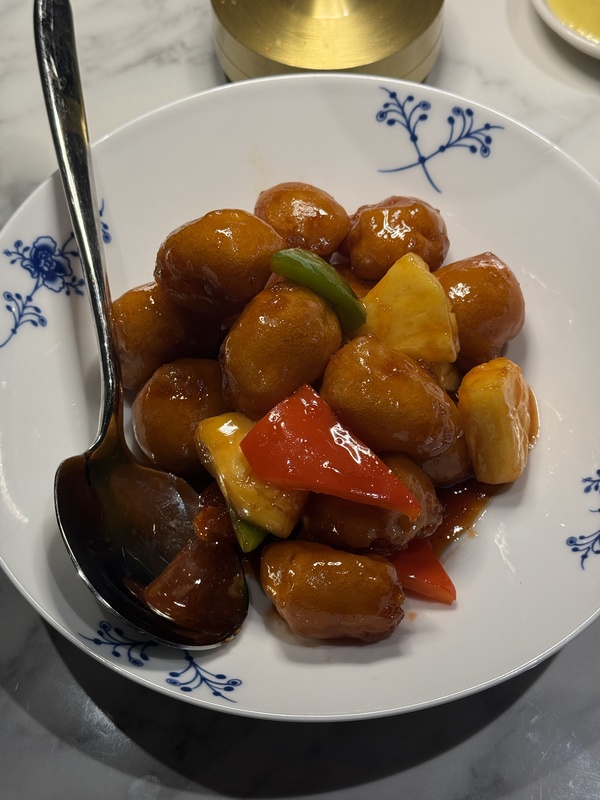
I had never seen sweet-and-sour pork presented this way, with the meat shaped into giant gnocchi-like balls with a glossy glaze that made them resemble dessert puffs. Much of the pork was pure fat, so I could only taste the sauce. While Zhu avoided the common mistake of making the sauce too sweet, like some sort of cursed tanghulu, I must admit I like my sweet-and-sour pork to taste somewhat like pork, so I wasn’t the biggest fan.
The brunch concluded with the lava custard xiaolongbao, which were nothing like the classic savory ones, besides their criminally small size — the wrapper was much thicker, almost resembling mochi, and the creamy custard (except for one incident) did not explode on first bite. My tablemates enjoyed the mochi texture; I did not, as the stubborn material clung to my teeth well after I was finished eating the dessert.
When the bill came, I braced for impact, but due to the complimentary pork, the total was lower than I thought (still $57 per person). Although I’m not sure if I’ll ever pay for such an experience out of my own pocket, I’d still consider trying their full menu… so corporate dinners, here I come!