Extensive renovation of Building 39 begins
The project is part of an initiative that received $25 million from the Commonwealth of Massachusetts





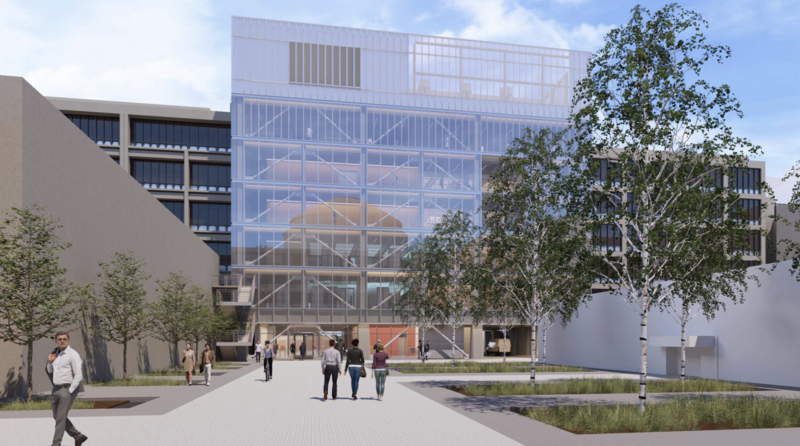
Photo courtesy of HGA
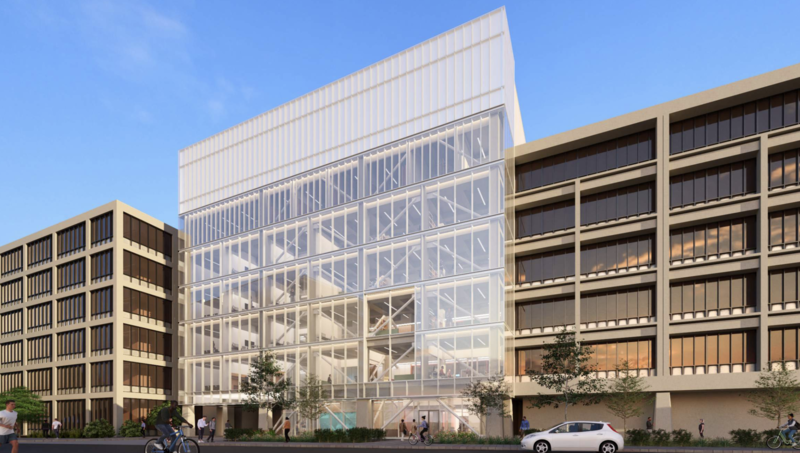
Photo courtesy of HGA
MIT’s Building 39, officially known as the Gordon Stanley Brown Building, is getting an extensive renovation of its facade and interior. It is slated to finish in early 2028.
The project, part of the MIT Quantum Initiative that has secured $25 million in funding from the Massachusetts state government, also involves the installation of two new quantum computers in the building.
The renovation is being led by HGA, the same architecture firm that designed the Lisa T. Su building, which is home to MIT.nano. Construction began the week of Aug. 24.
Originally designed by the venerated architecture firm Skidmore, Owings & Merrill, Building 39 was constructed in 1967. Like its neighbors on Vassar St., the six-story building boasts a brutalist concrete and glass facade. It was once the former home of Project MAC, a precursor of the Internet.
Following the renovation, the brutalist facade of the building will be replaced by a glass curtain, and one of the two original underpasses beneath the building will become a lobby and media gallery.
In addition to quantum computers, the building will also house integrated electronics, biology, and chemistry laboratories.
According to a Department of Facilities update, construction hours for the building will be from 7 a.m. to 6 p.m. on weekdays, with some occasional work on the weekends.
In a statement at the MIT Quantum Systems Laboratory launch event, President Kornbluth shared that the project is part of an effort to cement Massachusetts’s place in quantum technology.
“Greater Boston has the greatest concentration of quantum talent of anywhere in the world, so it has been clear to us for some time that if we could magnify all of that talent with the right facilities, we could establish Massachusetts as a national hub for quantum innovation and help catalyze the next generation of quantum technologies,” remarked Kornbluth.
Greater Boston is currently a preeminent hub for biotechnology, with firms including Moderna, Novartis, and Biogen calling the area home. Historically, it was also a central hub for computing before Silicon Valley. Route 128, the famous beltway around Boston, was once home to former technology giants like Digital, Wang Laboratories, and Lotus Development, until the shift from minicomputers to personal computers caused it to lose out to the west coast.
According to Kornbluth, the new resources in Building 39, like the ones in MIT.nano, will also be available to research groups from other universities in the state, including Harvard and the University of Massachusetts.