Dr. Fauci among medical professionals presenting at the American Lung Cancer Screening Initiative’s third annual summit
The summit was organized to expand the diverse community of health care professionals and aspiring health care providers joining the fight against the most common cause of cancer death in the United States





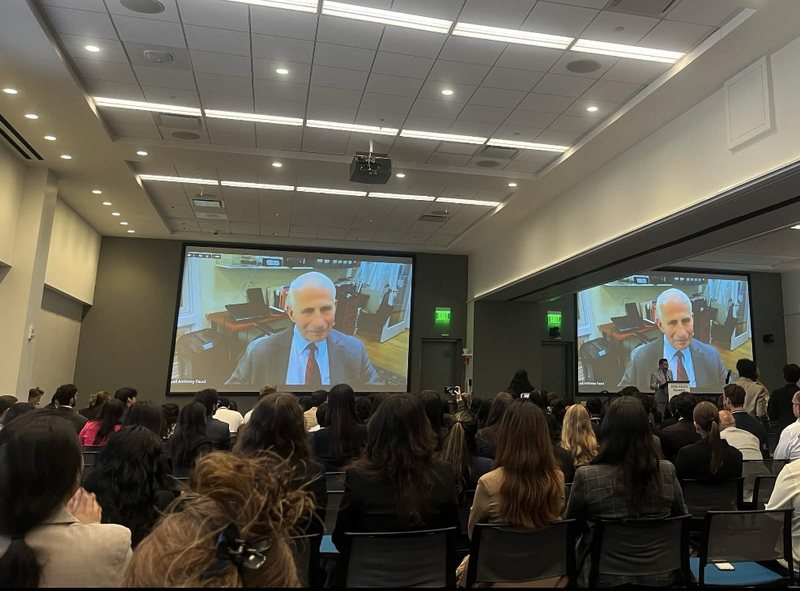
Malakhi Beyah–The Tech
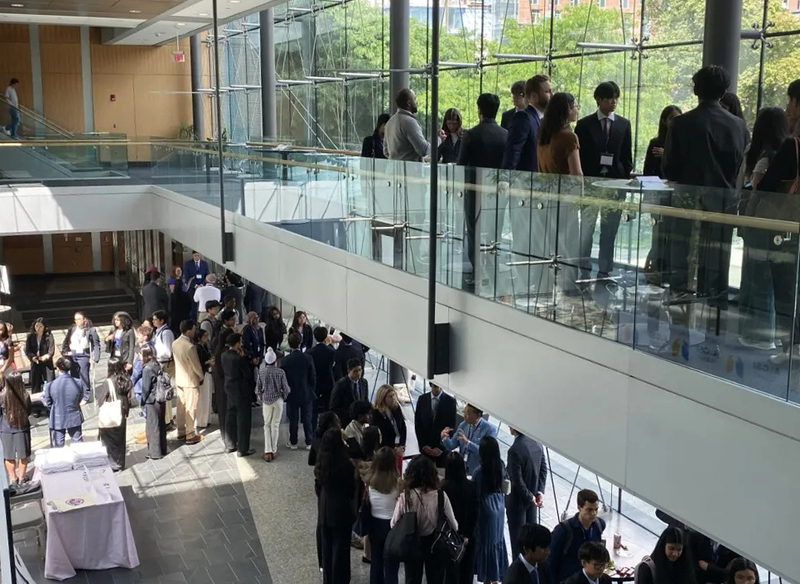
Veronika Moroz–The Tech
On July 10, 2026, hundreds of young aspiring physicians gathered in the Joseph B. Martin Conference Center at Harvard Medical School, filling the hallways with excited chatter. Within a few hours, conference organizers had divided the students into small groups for a mentoring session where each stood captivated around an established medical professional. They spent the next hour firing off questions from “MD or MD PhD?” to “Do I have a chance at a medical career if I don’t know what I want to specialize in yet?” and trying to grasp how they could chart their own medical journeys.
The physicians were at the third annual American Lung Cancer Screening Initiative (ALCSI) Summit, a three-day long conference focused on celebrating ALCSI’s efforts to spread lung cancer awareness and bringing together a community of aspiring doctors, from middle schoolers to medical school students. The attendees were mostly members of ALCSI’s over 100 chapters: ambitious young pre-med students, who — outside of classes, shadowing, and a myriad of other extracurricular activities — are also manning tables at community events, working with community leaders to put up signs on public transportation, offering screening to unhoused people, and passing legislation that requires lung cancer screening guidelines to be displayed where all nicotine products are sold in the state of California.
ALCSI was founded in 2017 by Harvard Medical School Associate Professor of Surgery and Mass General Hospital Thoracic Surgeon Dr. Chi-Fu Jeffrey Yang to raise awareness for lung cancer screening. Since then, it’s grown into an organization with chapters at universities, high schools, and nonprofit organizations, about 110 of which were represented at the conference.
However, such goals cannot be achieved simply through the efforts of motivated pre-med students; they also require the efforts of any innovative student hoping to make a difference. From detecting radon in individuals’ lungs to utilizing performing arts to showcase stories of lung cancer survivors, the summit demonstrated the creative ways advocates can call more attention to this deadly disease.
Why spotlight lung cancer specifically?
Lung cancer, which is caused by genetic mutations that make lung cells start dividing suddenly and uncontrollably, is the leading cause of cancer-related deaths in the United States. Every year, more Americans die of lung cancer than from breast cancer, prostate cancer, and colorectal cancer combined. Though people with a history of smoking or smoking exposure are particularly at risk, other factors, like genetics and exposure to environmental pollutants like radon, can also play a role.
When it’s caught in late stages, lung cancer has an 8% survival rate, according to the American Lung Association. But when it’s caught before the cancer has the chance to spread to other parts of the body, the rate can be as high as 63%.
Take the number of cigarettes you’ve smoked per day and multiply it by the number of years you’ve smoked. What you get is a pack-year, the metric experts use to estimate how likely it is that lung cancer screening could save your life. The U.S. Preventative Services Task Force recommends that people between the ages of 50 and 80 who are currently smoking, have a 20 pack-year history, or have quit smoking within the past 15 years get screened every year with a low-dose computed tomography (CT) scan.
But there’s a problem: the stigma. While getting lung cancer is never anyone’s fault, the fear of being associated with smoking can deter people from scheduling that screening appointment, even if they have never touched a cigarette. That’s where ALCSI comes in. Its members spent hours talking to community members, passing out flyers, and designing comprehensive awareness campaigns encouraging people to plan a screening.
Over 300 of these members came together for the ALCSI Summit, where they had a chance to talk to experienced physicians, meet former director of the National Institute of Allergy and Infectious Diseases Dr. Anthony Fauci, strategically plan their organization’s next steps, and watch the final round of the ALCSI Lung Cancer Innovation Challenge.
Promoting lung cancer awareness, from art competitions to in-flight campaigns
For many aspiring medical professionals in attendance, the Lung Cancer Innovation Challenge Finalist presentation session was the highlight of the weekend.
The international challenge, launched back in February, tasked teams of middle- and high-school students with taking lung cancer prevention into their own hands. Working alongside an ALCSI mentor, the teams spent four months ideating and implementing novel approaches to spreading awareness about the benefits and availability of lung cancer screening.
The top ten teams (determined by their projects’ creativity, impact, cost, scalability, and demonstrated subject knowledge) were invited to present their work at the ALCSI Summit as finalists. Following the presentations and deliberation by a panel of judges, the first, second, and third place teams were respectively awarded $10,000, $5,000, and $2,000 to continue their projects.
“It’s all to save lives,” said Soneesh Kothagundla, an incoming freshman at Harvard University. Kothagundla helped coordinate media outreach for this year’s ALCSI Summit, having invited The Tech to report on the event in June.
The young researcher had the rare opportunity to exhibit two finalist projects at the ALCSI Summit that weekend: “Lung Cancer Awareness at 40,000 Feet in the Air: An In-Flight Campaign to Change Lives” and “The National Billboard Project.” Kothagundla developed and presented the latter project alongside Sai Thoutham, a rising senior at Lee County High School in Lee County, Georgia.
The two projects, like the other eight presented at the summit, demonstrated the considerable potential of concerted efforts to promote lung cancer screening. Videos of Kothagundla’s pre-flight PSA announcements about lung cancer screening garnered over half a million views on social media and inspired dozens of radon kit purchases; The National Billboard Project achieved 5.1 million views across their 162 billboards across eight states.
While the task of negotiating with billboard retailers and investors was draining at times, Thoutham remarked that it was all worth seeing the real impact their work had on people’s lives.
“That just puts a smile on our face,” Thoutham said, recalling phone calls he and Kothagundla would get from people who got screened after seeing their billboards. “Because, hey, someone’s being helped around here.”
Rising high school senior Ava Villacorta won the third-place prize for her project “Breath of Remembrance.” The southern California-based project encouraged lung cancer screening advocacy and education via artistic expression, including through a student art competition recognizing celebrities affected by the disease.
Rising high school senior Rohan Kundra and rising high school junior Neil Thakkar were awarded the second-place prize for their project “LungFACTS (Follow-up Analytics and Community Targeting System).” The Pennsylvania-based team developed an AI patient navigator paired with a national lung cancer screening tracking system, considering a user’s basic information (such as their age and smoking habits) before providing advice on whether and how to proceed with getting screened.
Rising high school sophomore Arsheen Sethi and rising eighth grader Jeevat Sethi won the first-place prize of the innovation challenge with their “Breathe Easy Initiative” project. The duo created a comprehensive outreach program in their home state of New York, utilizing lung cancer education, smoking history surveys, hospital and non-profit partnerships, and local interactions with potential patients to spread the word about the benefits of lung cancer screening.
Dr. Fauci speaks to the need for advocacy and medical integrity
Dr. Anthony Fauci attended the second day of the conference via Zoom for a fireside chat, sharing his perspective on the importance of moving prevention efforts past skepticism to sustained advocacy.
“All prevention modalities historically started off with skepticism about it until the advocacy for it overcame the skepticism,” Fauci explained, pointing to the increasingly regular practice of colonoscopies and skin exams as proof that public habits can shift when advocates persist.
Showing up and doing the work even when it remains unrecognized or uncertain was a core theme in Fauci’s remarks as he answered student questions about his own career. In the earliest years of the HIV/AIDS epidemic, for example, the disease didn’t yet have a name and effective therapies were nonexistent.
“I wasn’t healing anybody. But one of the things that I could do and learn was how to be someone who exercises that other aspect of medicine, which is empathy and caring and comforting,” Fauci said.
He also spoke candidly about what it takes to advise those in power without compromising one’s principles, recalling advice he received before his first meeting with a sitting president: to tell himself that it might be the last time he ever walked into the White House, so that a fear of not being invited back would never tempt him to tell a leader what they wanted to hear instead of the truth. “At least you’ll walk out of the building with your integrity intact,” he reflected.
Perhaps most impactful for the students in attendance, though, was how Fauci described arriving at medicine in the first place. His path was not a straight line from a childhood fascination with science; he obtained a Bachelor of Arts in Classics while being pre-med. “It sounds a little bit like an oxymoron,” he recalled.
“I was trying to figure out how I could satisfy my proclivity to understanding human beings as people, as opposed to objects of a scientific experiment,” Fauci said, later adding, “I found out that you could wed both your aptitude and love of science with your love of the human species.”
He did admit, nonetheless, that he would have ended up teaching classics or philosophy had medicine not worked out.
But Fauci was not the only medical professional at the conference whose path to medicine can seem surprising. Each day, conference participants were introduced to doctors who excel in medicine in spite of, or possibly because of, the ups and downs of their medical journeys.
Professionals discuss their unique paths in the field of medicine
Other accomplished medical professionals were also invited to share their own career journeys, motivating students with the message that the path to becoming a medical doctor can take many forms.
Dr. Narjust Florez was one of those professionals. Florez helped launch the #HearHer campaign in 2024, bringing awareness to thousands of women who are misdiagnosed or ignored in lung cancer diagnosis. Her entry into the medical field was far from as simple as pursuing an interest in lung cancer, however, with her early years in medicine being mired by the prejudice she faced as a Latina.
“I was just being me: bringing food, caring for people, nailing the [nursing] thing, and playing some music here and there,” she said. “But this is what struck me. There was the stereotype: [...] ‘You’re so smart for a Latina.’”
The frequent racial microaggressions pushed Florez into a years-long identity crisis; she wore more muted clothing, hid her Venezuelan accent, and avoided sharing her personal experience as a refugee with her residents in an attempt to fit in.
One patient interaction changed her entire outlook on her place as a Latina in the medical field. When someone else went to examine Florez’s patient in the emergency room, the patient stopped them. “I need to talk to Dr. Florez,” the patient stated. “You guys can say whatever you want; she just gets me.” She realized that day that her identity as a Latina was a strength, rather than a burden, in her medical career. The next morning, she ditched her standard white lab coat for her more colorful traditional clothes; since then, she said, “I haven’t worn anything else.”
Florez went on to co-found the Latinas in Medicine Community, which has funded seven Latinas in medical research through its Young Investigators Award.
Dr. Jonah Poster, another medical professional at the summit, had a notably different experience entering the medical field. In fact, he initially worked at Wall Street’s Morgan Stanley firm, never having even considered a career in medicine during his undergraduate years of college. Despite having secured a coveted position on Wall Street (and the sizable salary that came with it), Poster had a lingering concern that a career in managing global finances was not for him.
“I really wasn’t fulfilled,” he said. “I wasn’t driven by what I was doing.”
Hours of reading followed, with Poster researching fields as varied as economics, physics, and sociology to find what he was truly passionate about. He ultimately realized that medicine was the common factor tying all of those fields together, and he found himself eager to learn as much as he could about it.
Poster went back to college, balancing a post-baccalaureate program at Harvard Extension School and his own medical research. As stressful as the transition was at times, he “never regretted doing that” and “it was really rewarding.”
Poster was later hired by Shriners Hospital Boston, where he shadowed burn surgeon Dr. Robert L. Sheridan. Sheridan played a pivotal role as Poster’s advisor figure during that time, which Poster made sure to emphasize to the students at the summit questioning the need for a mentor early in their careers.
“Seeing [Sheridan] and what he did every day was truly inspiring,” Poster said. “[It] made me want to work harder and really affirmed my love for surgery.”
“It’s really inspiring to hear from these people that went through the same path but in different ways,” reflected conference attendee Elif Yigit, a neuroscience student on the pre-med track at Boston College. “It’s interesting how flexible of a field that is, and it motivates me and excites me because there’s so much I can do.”
Florez and Poster’s stories were only two of many shared at the ALCSI Summit that weekend. Whether it involved overcoming racism, making life-altering career changes, or anything in between, each professional’s background demonstrated to students how every one of them could find success in the medical field.
“Lung cancer specifically is such a unique opportunity because it’s a connection between the medicine, public health, and community outreach,” said ALCSI National Director and Summit co-organizer Sam Schwartz, a rising senior at George Washington University who joined the organization as a freshman.
For the students who spent the weekend meeting mentors and imagining their own future in medicine, that connection across diverse disciplines and communities is precisely what they came to find.
A correction was made on Aug. 8, 2026: An earlier version of this article misspelled Sai Thoutham's surname as “Thotham.”
A correction was made on Aug. 27, 2026: An earlier version of this article misabbreivated the American Lung Cancer Screening Initiative as ALSCI. The article has been updated to reflect the correct abbreviation, ALCSI.