Dear Alchemist, what’s that on your head?
MIT hackers take inspiration from Scotland’s “Tartan Army” tradition





Veronika Moroz–The Tech
Veronika Moroz–The Tech
Veronika Moroz–The Tech
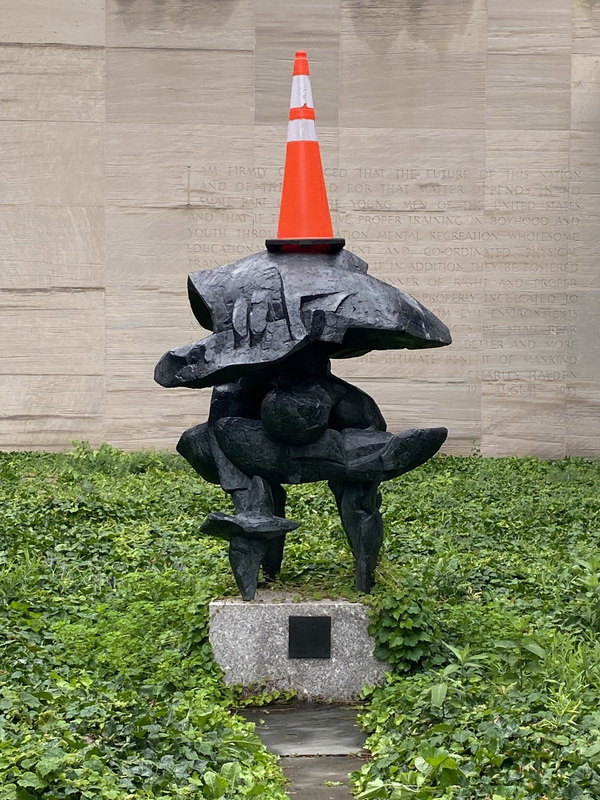
Samuel Adams. Make Way for Ducklings. Salem's “Bewitched.” Bill Russell. These are just a few of the local statues that the 20,000–30,000-strong Scottish soccer fanbase, the “Tartan Army,” adorned with a traffic cone in mid-June.
The act of placing cones on local statues is a tradition carried on by travelling Scottish, perhaps as a show of high spirits. In the 1980s, the Duke of Wellington statue in Glasgow, Scotland was mysteriously decorated with a cone on its head the night before the city was named the European Capital of Culture.
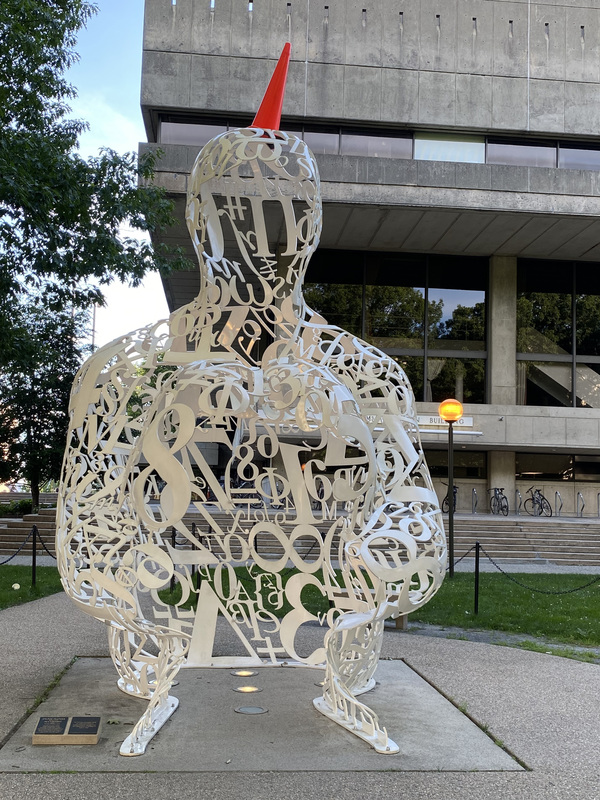
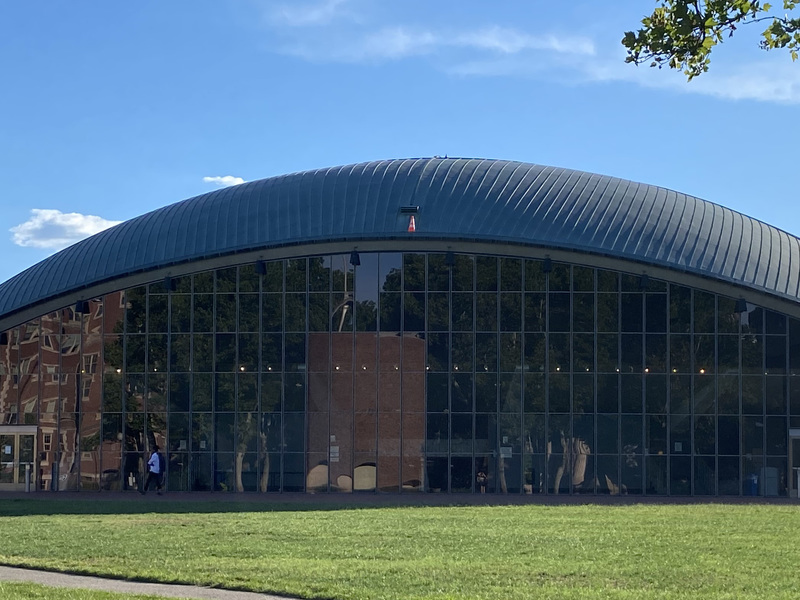
Carrying on the same playfulness as the Scots, MIT hackers placed cones on the Lobby 10 dome and the Alchemist statue in front of the Stratton Student Center. As of the time of online publication on July 9, the cone remains perched on the Alchemist’s head.
Students on campus reacted with amusement and curiosity.
“I think it’s funny how [MIT staff] haven’t taken [the cones] down yet,” Sophie Nguyen ’28 said. “Next time, the hackers should put a giant cone on the Great Dome.”
Yizhou Chen ’28 summed up his thoughts with a single phrase: “No Scotland, no party,” the unofficial motto that has taken over the Internet and represents the Scottish soccer team, their Tartan Army, and their conquest of Boston’s pubs over the last month.
2026 marks Scotland’s long-awaited comeback to the FIFA World Cup after their last qualification in 1998. Facing off against Haiti in the opening game of the group stage at the Boston (Gillette) Stadium in Foxborough, Massachusetts on June 13, Scotland claimed their first World Cup victory in 36 years with a 1-0 final score. They then lost 0-1 to Morocco on June 19.
Afterward, the Scots headed to Miami to face off against Brazil at Hard Rock Stadium, where they unfortunately lost 0-3 and were knocked out of the tournament on June 24.