‘Daughters’ documentary directors Angela Patton and Natalie Rae talk about the emotional toll of parental incarceration at WBUR CitySpace
Patton: “You are not correcting anything when you are purposefully ripping families apart and destroying lives”





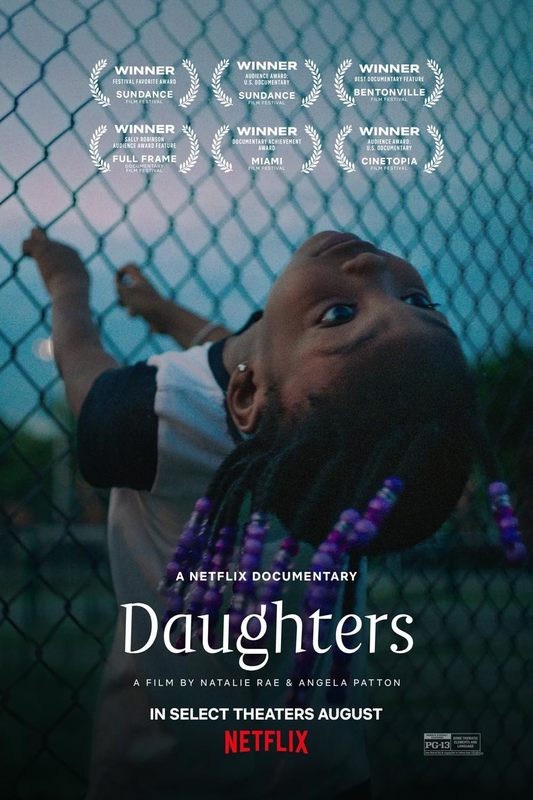
Photo courtesy of Netflix
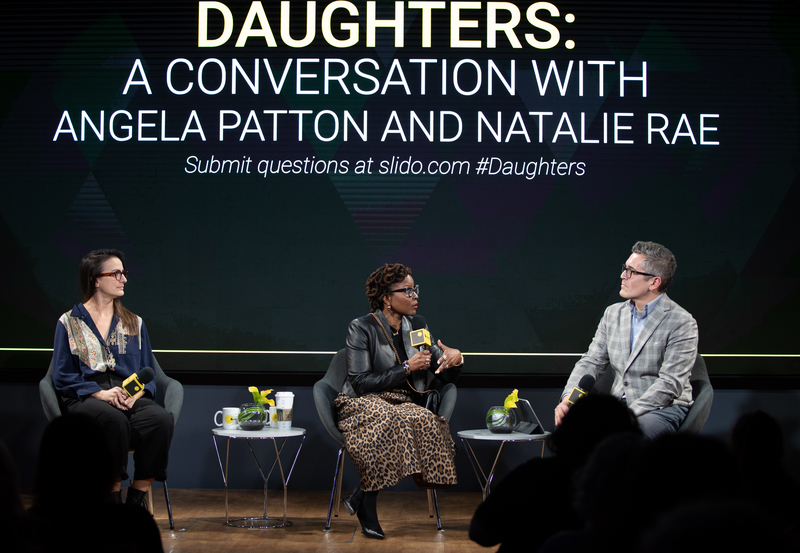
Photo courtesy of Milena Fernsler/WBUR
Angela Patton and Natalie Rae
Daughters
WBUR CitySpace, Boston
March 27, 2026
On Friday, March 27, WBUR CitySpace hosted a screening and discussion of Daughters, an award-winning 2024 documentary about four girls ages 5–15 who prepare for a special father-daughter dance with their incarcerated fathers in a Washington, D.C. jail. To attend the dance, the fathers must complete a 10-week fatherhood program in which they reflect upon family, relationships, and incarceration. The event began with a 34-minute screening of the film, followed by a discussion with directors Angela Patton and Natalie Rae moderated by WBUR reporter Simón Rios.
Angela Patton is the founder of Camp Diva Leadership Academy and the CEO of Girls for a Change, a nonprofit that aims to empower and prepare Black girls for the world. In 2012, Patton gave a TEDxWomen talk about organizing a father-daughter dance in a jail in Richmond, Virginia, which has gained around a million views. Natalie Rae is a film director from Canada who has directed commercial campaigns, global PSAs, and music videos. Daughters is her debut feature documentary.
A heartbreaking film
Daughters opens with a montage of black and white shots of the father-daughter dance. The background sound starts with key quotes from Patton’s TED talk, which then transitions to contemporary instrumental music that is bittersweet and sentimental. A particularly touching scene is when a crying girl tightly hugs her father, reflecting the emotional toll of a father’s separation from his daughter.
After the introduction, the film shares intimate interviews that focus on the lives of four girls: Aubrey (age 5), Santana (age 10), Ja’Ana (age 11), and Raziah (age 15). What makes Daughters special is that these interviews are not driven by a clear topic or list of questions from the directors. Instead, the girls share their thoughts and feelings about their father’s incarceration, ranging from Aubrey’s kind and lighthearted remarks about her dad to Santana’s palpable anger at her dad for his past crimes.
By presenting individuals from varied backgrounds and ages, the film does an excellent job conveying the emotional weight and complex feelings that come with parental incarceration. The intimate, close-up shots of the girls make their emotions and pain feel visceral for the audience, such as Santana’s feelings of hurt and shame.
Besides the girls, the film also provides a nuanced glimpse into the difficult emotions that the fathers experience when they participate in group discussions about fatherhood, which are facilitated by a counselor. From these reflective discussions, many of the fathers opened up and became vulnerable, expressing regret for not being present for their daughters and being in jail. Some shared that they haven’t even seen their daughter in real life. These scenes not only helped to humanize the fathers, but also cultivated empathy for them despite their history.
The story behind Daughters
Daughters came to fruition because of Rae’s interest in collaborating with Patton on a documentary about the father-daughter dance after Rae was deeply inspired by Patton’s TED talk. Because she grew up with a father who wasn’t very present, Rae was moved to tears when Patton said, “Our fathers are our mirrors that we reflect back on when we decide what type of man we deserve.” Patton’s talk motivated Rae to address the issue of daughters with absent fathers, as she believes that this problem is related to gender equality.
“We really like to fight as young women and we are trying to be equal and do all these things,” Rae said. “But maybe a part we tend to overlook is the relationship with our dads.”
Although Patton received many emails from journalists and filmmakers who wanted to film a documentary, she did not respond to their requests because she felt that their intentions were not genuine. However, Patton was struck by Rae’s authenticity based on her interest in wanting to meet Patton and the girls who started the father-daughter dance. As a result, the two of them decided to work on this project, which ultimately took eight years before premiering in 2024.
Patton emphasized the importance of giving the interviewees time so they would feel comfortable with the film crew’s presence, given that the documentary discusses many personal and heavy topics. Patton credited the entire team for prioritizing care over the camera, as they did not pressure people to be filmed if they didn’t feel comfortable. She urged journalists in the audience to “stop chasing the story” and instead give people time and grace.
“They will come to you if you have a relationship,” Patton said. “Do truth telling with them and not for them.”
Continuing Patton’s point, Rae shared that she made Daughters a long-scale project so the documentary would be a coming-of-age film that showed the girls growing up over time.
“We follow them for a number of years to really see what that one day of touch does for the rest of their lives,” Rae said.
She also underscored the importance of building intimacy and trust with the people in the film, which required time. As a result, Rae’s approach to filming was not a “set interview,” but rather a series of unstructured conversations with the girls in the film.
In regards to the film crew’s emotions when they saw the father-daughter dance, Patton described it as a complicated emotional experience filled with joy, anger, and sadness.
“I’m still thinking about all of those fathers that are not able to participate,” Patton said. “I know what’s going to happen when we have to separate them.”
Despite the emotional pain and “secondary trauma,” what inspires Patton to pursue this work is reminding herself how her efforts are “life-changing” for the daughters and incarcerated fathers.
The special fatherhood program and father-daughter dance has had a tremendous positive impact on the families. The fathers in the program not only had stronger relationships with their daughters, but also were significantly less likely to be incarcerated again. According to Patton, the non-recidivism rate of the fathers in the program is 95%. Meanwhile, the recidivism rate in the U.S. is 70% within five years.
Patton underscored the importance of advocating for visitation practices and touch visits so incarcerated parents can be connected with their children. In the last decade, hundreds of jails have stopped touch visits and now offer video visits that require a fee. Patton called out the irony of the word “correctional facility,” saying, “you are not correcting anything when you are purposefully ripping families apart and destroying lives.” However, Patton is hopeful that programs like the one in Daughters can reunite families and significantly lower recidivism.
Although Daughters focuses on Black girls with incarcerated fathers, Patton argued that the documentary is also for the “invisible” children out there who have an incarcerated parent, regardless of race or gender. She ended her remarks with a powerful question for the audience, asking, “What can I do while I’m on the outside to make it better for any child that is invisible?”