Andris Nelsons to leave Boston after 13 seasons as music director of the BSO
Musicians and patrons mourn the visionary maestro’s exit amid conflicting visions for the orchestra





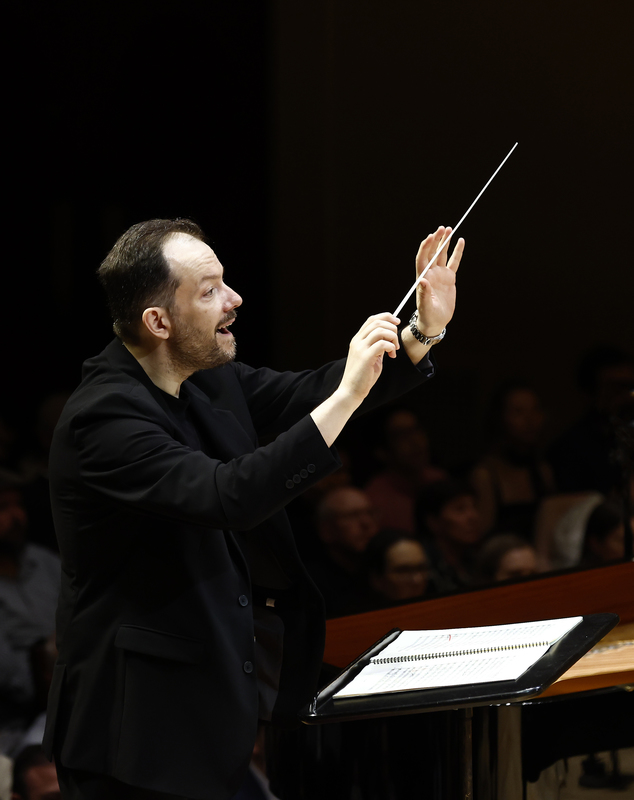
Photo courtesy of Winslow Townson
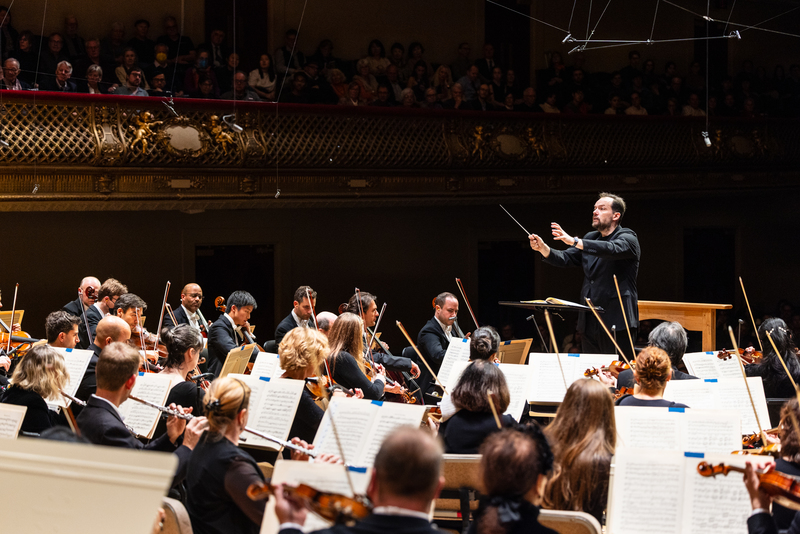
Photo courtesy of Robert Torres
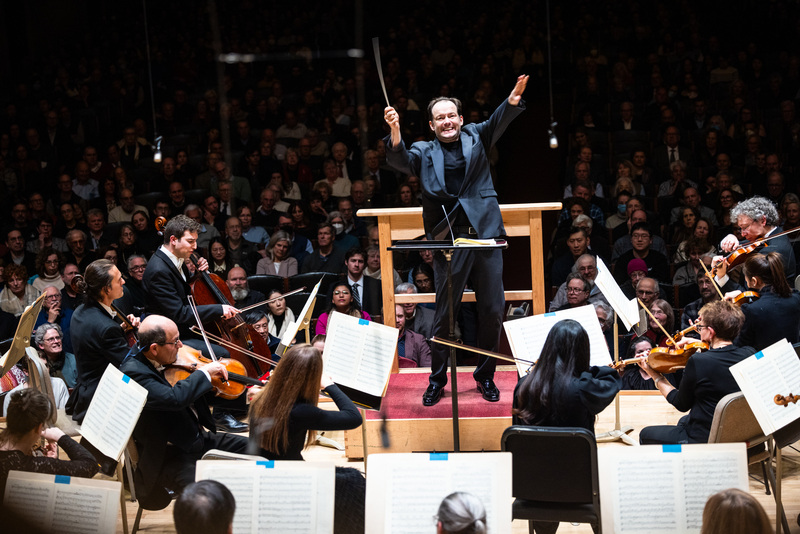
Photo courtesy of Robert Torres
On the gusting morning of March 17, more than 100 musicians and staff members gathered on the steps of Symphony Hall, chanting in unison: “Andris, Andris, Andris…we love you!” Their voices echoed through Boston as a poignant prelude to classical music’s most unexpected departure. Earlier, on March 6, Boston Symphony Orchestra (BSO) President and CEO Chad Smith had announced that Andris Nelsons, the orchestra’s music director since 2014, would conclude his tenure at the end of the 2027 Tanglewood season. This decision was shocking for an institution that had seemed, just months before, secure in its artistic vision.
When Nelsons first took the podium at Symphony Hall on Sept. 27, 2014, he became the youngest music director the BSO had appointed in over a century. The Latvian-born maestro arrived as a fresh voice at a moment when the orchestra desperately needed one. His predecessor, James Levine, had left a fractured ensemble in 2011; luckily, Nelsons had an extraordinary gift for transformation. Over his 13 years in Boston, Nelsons shifted the BSO’s identity. His decade-long focus on the symphonies of Dmitri Shostakovich produced what many consider one of the era’s most defining recording projects, a cycle that garnered multiple Grammy Awards. The orchestral community took notice, and by 2018, Nelsons had been named Musical America’s Artist of the Year, a recognition that seemed to cement his place among the world’s great conductors.
But Nelsons’s influence extended beyond the concert hall. Under his direction, the BSO re-established its reputation internationally, completing four European tours and multiple journeys to Japan. In 2015, the orchestra performed at festivals in London, Salzburg, Vienna, Lucerne, Milan, Paris, Cologne, and Berlin — a statement of artistic confidence that was widely applauded.
Nelsons also created a unique transatlantic partnership between the BSO and the historic Gewandhaus Orchestra of Leipzig, bringing the cultural and musical niches of both ensembles to audiences on both sides of the Atlantic. This partnership, which began in 2017 when Nelsons took on the position of Gewandhauskapellmeister, was a bold artistic vision that few conductors could have conceived, let alone executed.
The collaboration between Nelsons and the BSO’s musicians was strong and central to his tenure. Principal flutist Lorna McGhee captured this sentiment in a letter to the board that resonated with others in the classical music world: “To work with Andris is to work at the pinnacle of our profession. He is one of the most sought-after, highly respected music directors the world over. He is the deepest, most humble, most sincere, truest musician I have ever worked with. Working with him at the BSO has been the artistic highlight of my life.”
Edwin Barker, who served as the BSO’s principal bass for nearly half a century before his retirement last year, offered a similar statement: “I have never seen the esprit de corps in the orchestra so high as it has been under Andris Nelsons’s tenure.”
Nelsons introduced a unique commitment to contemporary music. Under his direction, the BSO and Tanglewood Music Center commissioned over 100 new works. Under his direction, the orchestra gave 22 world premieres and 13 U.S. premieres. Another highlight of Nelsons’s tenure involves one of classical music’s most important initiatives. In February 2020, when a planned Asian tour was cancelled because of the COVID-19 pandemic, Nelsons pivoted to create the first Concert for the City, a free community performance at Symphony Hall. This event became an annual tradition, bringing music directly to Boston residents who may never otherwise experience it.
Under Nelsons’s baton, Grammy victories continued to accumulate for the BSO. Beyond the Shostakovich cycle, the orchestra won Grammy Awards for recordings of Shostakovich's symphonies No. 4 and 11, a complete Richard Strauss symphonic works collection, and, most recently in February 2026, the BSO won a Grammy for “Shostakovich: The Cello Concertos” with cellist Yo-Yo Ma.
Yet for all these accomplishments, it seems it was not sufficient to overcome what the BSO’s board termed a lack of “alignment on future vision.” The announcement in early March seemed to come from nowhere, even though it later became clear that negotiations had been underway since the previous September, a fact that surprised both musicians and patrons.
The speed and secrecy of this decision shocked the orchestra; musicians learned of Nelsons’s departure at the same moment as the general public, a breach of trust that several orchestra members underscored as a fundamental violation of the institution’s values.
“There is a fundamental lack of common decency in not including the musicians in any discussions leading up to the decision,” McGhee wrote to the board. “It is disingenuous to talk of ‘our beloved orchestra’ when we are treated as if we don’t exist.”
Double bass player Tom Van Dyck went further, writing that the decision and its manner represented “the biggest crisis since its founding in 1881,” according to the New York Times.
“Not only does the manner of Andris’ dismissal run counter to this stewardship,” Van Dyck wrote, “the decision, the lack of communication, and the poor judgement involved signal to musicians that they are not to be consulted.”
The musicians’ statement is unambiguous, strongly opposing the decision by the Board of Trustees to end Nelsons’s appointment, signaling a strong belief in his vision for the future.
Nelsons has responded with grace. In a letter to the BSO community, he wrote, “The Board has decided that my music directorship will conclude in August 2027, with the aim of a mutually amicable final chapter. While this is not the decision I anticipated or wanted, I am unwaveringly committed to you and to our work together.”
He added that he understood “the decision was not related to artistic standards, performances, or achievements during my tenure,” suggesting that the parting stemmed from strategic disagreements rather than any artistic shortcoming.
As the 2026–2027 season unfolds, the BSO faces a delicate task: properly honoring Nelsons’s extraordinary contributions while planning a course for the future. The Tanglewood season will traditionally conclude with Beethoven’s Ninth Symphony and the “Ode to Joy,” a coda that, given the circumstances, seems both fitting and bittersweet.
In the meantime, Nelsons will continue to lead the Vienna Philharmonic, conduct at the Gewandhaus, and maintain his role as Head of Conducting at Tanglewood. His international prominence ensures he will remain among the world’s most sought-after conductors. For Boston, however, the loss is palpable. As McGhee concluded in her letter to the board: “I implore you, please reverse your decision.”
The maestro’s final season approaches, and the encore, it seems, will be a farewell.